Blog Article
Car Buying Tips for Women: 5 Finance Office Mistakes to Avoid Before You Sign
Industry expert Audrey Tejada shares what every woman should know before finalizing her vehicle purchase.
Finance & Buying · May 2026 · 12 min read
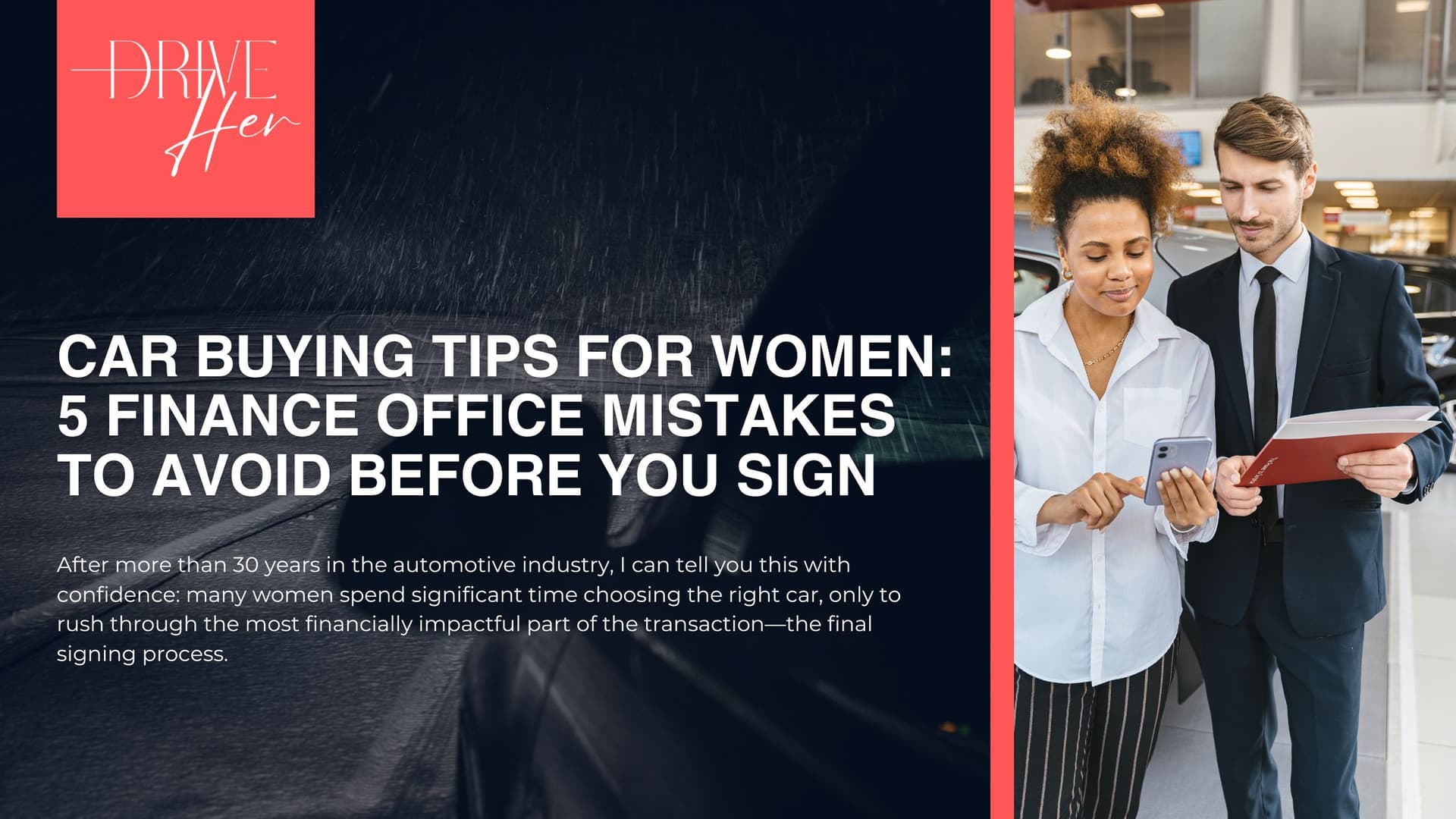
Buying a vehicle can feel empowering—until the moment you're handed a stack of paperwork in the finance office and expected to make major financial decisions in a matter of minutes.
After more than 30 years in the automotive industry, I can tell you this with confidence: many women spend significant time choosing the right car, only to rush through the most financially impactful part of the transaction—the final signing process.
The truth is, the finance office should not be intimidating. It should be educational. And when approached correctly, it becomes one of the most important opportunities to protect both your investment and your financial future.
Here are five things every woman should know before signing on the dotted line.
Slow Down—Never Buy in a Rush
One of the biggest mistakes I see buyers make is rushing simply because they are tired, hungry, emotional, or ready to get the process over with.
But haste in the finance office often leads to regret later.
This is not the moment to skim, nod, and sign. This is the moment to slow down and fully understand what you are agreeing to. Why are you saying yes? Why are you saying no? What does each option actually mean for your long-term financial picture?
A vehicle is one of the largest purchases most people will make outside of a home. It deserves thoughtful consideration—not rushed decision-making.
Listen Before You Decline
Many consumers walk into the finance office already guarded, assuming every recommendation is simply an upsell.
That mindset can cost you.
A strong finance manager is not there merely to "sell products." They are there to educate you on options that may help protect one of your most important assets.
Your vehicle is how you get to work, care for your family, travel, and maintain your independence. If a major repair occurs unexpectedly and you are unprepared, the financial burden can be significant.
That does not mean you should buy everything offered. It means you should be open enough to listen, ask questions, and make informed decisions based on your ownership plans, driving habits, and budget.
Focus on More Than the Monthly Payment
One of the most common mistakes buyers make is focusing solely on whether the monthly payment feels comfortable.
A lower payment does not automatically mean a better deal.
Lengthening the loan term, adjusting interest rates, or restructuring the financing can lower a payment while increasing the total amount paid over time.
Understand your financing completely:
What is your interest rate?
How long is the loan?
Is it a simple interest loan?
Can you prepay without penalty?
If your lender allows prepayment, structuring an affordable payment while making extra principal payments later can be a strategic way to reduce total interest and pay the vehicle off sooner.
Protect Yourself If You're Financing with Little Down
If you are not putting substantial money down, GAP insurance is worth serious consideration.
Here's why: if your vehicle is totaled or stolen, insurance typically pays market value—not what you owe on the loan.
That means you could be left with a remaining balance on a vehicle you no longer own.
I have seen too many buyers learn this lesson the hard way.
If you are financing a large portion of the vehicle, especially on a long-term loan, GAP can provide critical protection and peace of mind.
Understand the Lease Before You Love the Payment
Lease payments can be attractive. But many buyers choose a lease because of the lower payment without fully understanding the long-term structure.
Leasing is not simply "renting a cheaper car."
It comes with mileage restrictions, wear-and-tear standards, and end-of-term responsibilities that can become expensive if not planned for properly.
Before agreeing to a lease, ask yourself:
Do I drive more than average?
Does this mileage allowance fit my lifestyle?
Am I prepared for possible excess wear charges?
The wrong lease structure can turn a seemingly great deal into a costly surprise.
Final Thought
The most confident buyers are not the ones who decline every option in the finance office. They are the ones who understand what they are purchasing and why.
As women, we must approach financial decisions with clarity—not intimidation. With education—not assumption. And with the confidence to ask every question necessary before we sign.
Because an empowered woman does not simply buy a car.
She makes informed financial decisions that protect her future.
About the Author
Audrey Tejada is the President and CEO of Auto Network Consulting, where she has spent decades training dealerships across the country on how to properly educate, advise, and serve customers throughout the vehicle-buying process. With more than 30 years in the automotive industry and deep expertise in finance and insurance, Audrey is known for helping dealerships elevate performance while creating more authentic, transparent, and customer-centered buying experiences. She believes purchasing a vehicle is one of the most important financial decisions a consumer can make—and that every buyer deserves to be educated and empowered before signing.